
 EN
EN
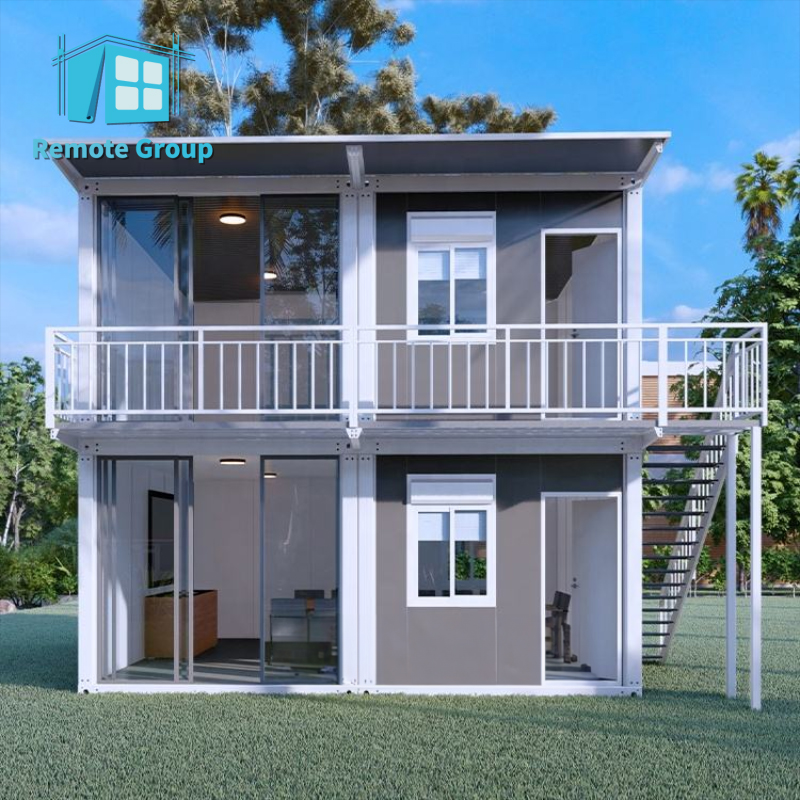
Urbanization and Policy Shifts Driving Global Demand for Casas Prefabricadas
Rapid urban growth and housing deficits in Latin America, Southeast Asia, and Africa
Latin America, Southeast Asia, and Africa are undergoing some of the world’s fastest urbanization rates. Each year, millions migrate to cities—straining infrastructure and exposing severe housing shortages. In Latin America, the deficit exceeds tens of millions of units; in Sub-Saharan Africa, over 200 million urban residents live in substandard shelter. Traditional on-site construction cannot scale to meet this demand: it is slow, labor-intensive, and costly. Casas prefabricadas provide a timely alternative—factory-built components enable homes to be erected in weeks rather than months. Timber panel systems in Chile and light-gauge steel frames in Colombia already support affordable mid-rise residential projects. This speed isn’t incremental—it’s transformative, directly alleviating social and economic pressures intensified by delay.
National building code reforms and incentives accelerating casas prefabricadas adoption
Governments are actively reshaping regulatory environments to accelerate adoption. China now mandates increasing prefabrication shares in public housing and urban renewal projects. Several Southeast Asian nations offer tax breaks and density bonuses for off-site manufacturing. In Latin America, national housing agencies are fast-tracking permits for modular buildings and subsidizing certified prefabricated systems—reducing reliance on time-consuming site inspections and approvals. Green certification programs like LEED also favor casas prefabricadas, thanks to lower material waste and superior thermal performance. By aligning building codes with sustainability and affordability goals, policymakers have turned prefabrication from a niche option into a mainstream strategy for closing the housing gap.
Speed, Predictability, and Cost Advantages of Casas Prefabricadas
40–60% faster project delivery versus traditional construction
Casas prefabricadas compress timelines by 40–60% compared to conventional builds—cutting typical delivery from three to six months down to as little as 10 days for full assembly. This acceleration stems from parallel workflows: while foundations are poured on-site, walls, floors, and roof trusses are precision-manufactured in climate-controlled factories—free from weather delays or supply disruptions. For developers, faster handover means reduced financing costs and earlier ROI; for families, it means swifter access to safe, dignified housing.
Tighter cost control amid labor shortages and supply chain uncertainty
With skilled labor scarce and material prices volatile, traditional construction budgets face mounting unpredictability. Casas prefabricadas counter this with fixed pricing models and factory efficiencies. Fewer on-site workers are needed, bulk procurement minimizes price fluctuations, and advanced fabrication reduces waste—studies show up to 90% fewer offcuts versus stick-built methods. The result is typically 15–25% lower total cost and significantly less risk of mid-project overruns—making prefabricated homes a financially resilient choice across market cycles.
Sustainability Leadership: How Casas Prefabricadas Reduce Environmental Impact
Up to 35% lower embodied carbon and precision waste reduction in factory settings
Casas prefabricadas reduce embodied carbon by up to 35% compared to conventional construction. Factory settings enable precise material cutting, recycling of offcuts, and standardized energy-efficient workflows—slashing construction waste by as much as 80%. Fewer deliveries to site further cut transport emissions. Crucially, tighter assembly tolerances also improve insulation continuity and air tightness, lowering operational energy use over the home’s lifetime. These combined benefits position casas prefabricadas not just as faster or cheaper—but as a foundational tool for meeting national net-zero commitments and tightening environmental regulations.
Casas Prefabricadas as Scalable Solutions for Housing Equity
Modular upgrading of informal settlements and rapid post-disaster housing deployment
Casas prefabricadas advance housing equity through two high-impact applications: incremental upgrading of informal settlements and immediate post-disaster response. In unplanned urban neighborhoods, standardized modules allow phased improvements—adding sanitation, reinforcing structures, or expanding living space—without displacing residents or undermining tenure security. In disaster zones, fully finished, weather-resistant units can be deployed within days, supporting recovery frameworks like the UN Sendai Framework for Disaster Risk Reduction. Both uses rely on the same strength: scalable, repeatable production that transforms casas prefabricadas from individual dwellings into systemic instruments of inclusive resilience.
FAQs About Casas Prefabricadas
What are the main advantages of casas prefabricadas?
Casas prefabricadas offer faster construction times, reduced costs, and improved sustainability compared to traditional on-site construction methods. They also ensure better quality control and reduce waste during production.
Why are casas prefabricadas gaining popularity globally?
Urbanization, housing deficits, and government incentives have driven the adoption of prefabricated homes. They address urgent needs for affordable and sustainable housing and are pivotal in post-disaster recovery efforts.
How do casas prefabricadas support sustainability?
These homes reduce embodied carbon, waste, and transportation emissions. Precision manufacturing in controlled factories ensures efficient material usage and better insulation for long-term energy savings.
Can casas prefabricadas be used in informal settlements?
Yes, they are ideal for upgrading informal settlements due to their modular nature, which allows incremental improvements without displacing residents or compromising tenure security.
Are casas prefabricadas cost-effective?
Yes, they typically reduce overall costs by 15–25%, thanks to fixed pricing models, fewer on-site labor requirements, and minimized material waste.
Table of Contents
- Urbanization and Policy Shifts Driving Global Demand for Casas Prefabricadas
- Speed, Predictability, and Cost Advantages of Casas Prefabricadas
- Sustainability Leadership: How Casas Prefabricadas Reduce Environmental Impact
- Casas Prefabricadas as Scalable Solutions for Housing Equity
- FAQs About Casas Prefabricadas