
 EN
EN
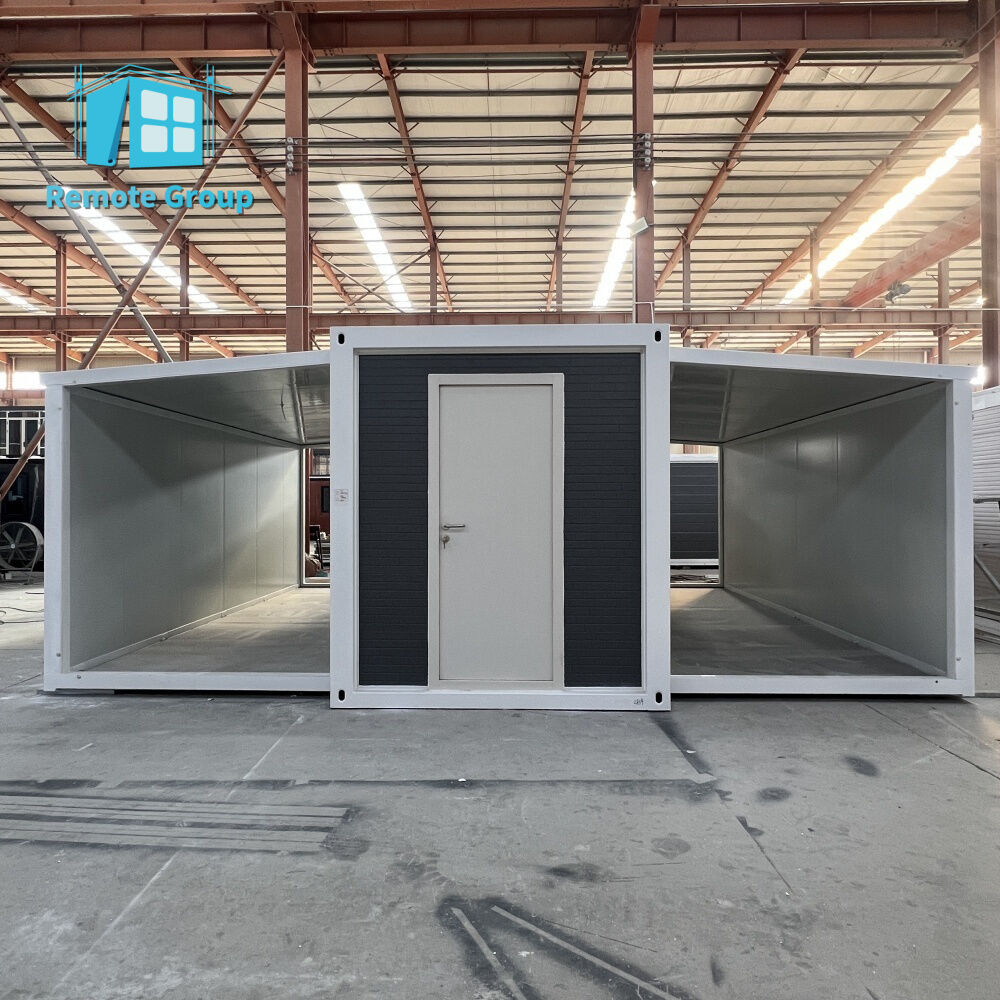
The Rise of Container Houses in Modern Co-working Culture
Container homes are changing the game for coworking spots, mixing that cool industrial look with practical layouts. With more people working remotely, cities are seeing architects and business owners repurpose old shipping containers into portable, green workspaces. According to recent industry data from 2024, building costs drop anywhere between 30 to 50 percent when using these containers instead of regular office buildings. Plus, they let companies set up temporary coworking locations in parts of town that aren't getting much use otherwise. Some startups have even converted entire parking lots into clusters of container offices during peak business hours.
Why Container Houses Align with the Co-working Movement
The nomadic nature of freelancers and startups demands adaptable workspaces. Steel-frame containers allow operators to scale modules seasonally—ideal for markets with fluctuating demand. Their industrial character also fosters creative, non-corporate environments that attract innovators.
Global Trends in Shipping Container Co-working Spaces
From Amsterdam’s tech campuses to Bangkok’s riverbank hubs, 72% of new coworking projects in 2024 incorporate container elements, according to commercial real estate analysts. Tropical climates benefit from natural insulation against heat and humidity, enhancing occupant comfort.
Case Study: Early Adoption in Urban Innovation Hubs
Berlin's Container Collective converted 42 shipping containers into a 3-story coworking complex in a former industrial zone. It achieved 95% occupancy within six months, proving strong demand for flexible workspaces near transit hubs.
Advantages of Rapid Deployment with Prefabricated Container Offices
Operators can launch functional container workspaces in 8–12 weeks—versus 9+ months for conventional builds. Prefabricated electrical and plumbing systems arrive site-ready, enabling fast assembly even in dense urban areas.
Design Flexibility and Customization of Container Workspaces
Creative Layouts and Modular Interior Design for Teams
Modular architecture enables diverse configurations: 12–40 ft units become open studios, soundproof pods, or collaborative zones using sliding partitions and foldable mezzanines. A 2023 study found 78% of startups using modular container offices achieved 30% faster team reconfiguration than in fixed spaces.
Optimizing Comfort: Lighting, Ventilation, and Temperature Control
Advanced insulation (R-15 to R-30) and integrated HVAC systems eliminate thermal discomfort. Strategic window placement delivers 22% more natural light (Green Building Council 2022), while cross-ventilation cuts cooling energy use by 40%.
Maximizing Utility in Compact Container Office Designs
Clever solutions transform 160 sq ft units into efficient workspaces:
| Feature | Space Saved | Use Case Example |
|---|---|---|
| Fold-down standing desks | 53% | Agile developer stations |
| Ceiling-mounted storage | 81% | Archive/IT equipment |
| Stackable units | 4X density | Multi-story co-working hubs |
These strategies enable customized container office solutions that evolve with team needs—no structural renovations required.
Cost and Time Efficiency of Container-Based Co-working Spaces
Container-based co-working spaces offer 60% lower upfront costs and accelerate timelines by 4–6 months (Aztec Container 2025). Standardized designs and prefabrication reduce waste and planning complexity—ideal for cost-conscious startups and growing brands.
Lower Construction Costs Compared to Traditional Buildings
Structural simplicity slashes capital expenses:
| Cost Factor | Container Offices | Traditional Buildings |
|---|---|---|
| Construction Costs | €600–€800/m² | €1,500–€2,000/m² |
| Foundation Requirements | Minimal ground preparation | Full concrete foundations |
| Lead Time | 3–4 weeks | 6–12 months |
Standardized builds reduce initial investment by 58–63%, primarily due to off-site fabrication.
Fast Setup: Real-World Example of an 8-Week Container Coworking Launch
Amsterdam’s tech district launched a 300-person hub in 55 days through off-site production, parallel site prep, and plug-and-play installation—74% faster than traditional builds.
Reducing Long-Term Operational Costs with Modular Units
Operators save $740k over five years (Ponemon 2023) via reconfigurable layouts, 30% lower HVAC costs, and scalable expansions. Mobility further reduces relocation expenses to 20% of conventional rebuild costs.
Mobility, Scalability, and Sustainable Growth for Co-working Brands
Container houses empower co-working brands with agile, sustainable infrastructure. Demand for relocatable offices surged 42% since 2022 (2024 Flexible Workspace Market Report), driven by market volatility.
Container Offices in Dynamic Markets: Flexibility and Relocation Benefits
Unlike fixed offices, containers can be redeployed in weeks. One European tech hub relocated 80% of its modules to match shifting member demand, minimizing lease risks.
Phased Expansion Through Modular Container Design
Brands scale incrementally—starting with 4–6 units—and add preconfigured modules as needed. This approach cut build times by 60%, with one Southeast Asian startup expanding from 800 to 2,400 sq ft in 11 months.
Sustainability and Reusability in Co-working Infrastructure
Conversions reduce construction waste by 93%. With 30+ year lifespans, 76% of retired units become housing or retail. LEED-certified spaces report 31% lower energy use, supporting net-zero goals.
Real-World Applications: Global Examples of Container Co-working Spaces
Innovative container conversions now serve as co-working hubs across six continents. Projects like Amsterdam’s Tech District demonstrate how modular design adapts globally while maintaining 30–50% lower operating costs (Urban Workspace Report 2023).
Amsterdam’s Tech District: A Container Coworking Hub Success Story
Thirty-two repurposed containers host 200+ tech professionals in Amsterdam’s Zuidas district. Featuring private offices, 5G meeting pods, and a rooftop terrace, the site launched in 14 weeks. Its adaptive reuse of industrial materials reduced construction waste by 80%.
Freelancer and Startup Ecosystems in Southeast Asia
Bangkok and Manila host over 40 container-based facilities for digital nomads and micro-enterprises, offering 24/7 access, biometric security, tropical cooling systems, and leases from $120/month.
Innovative Urban Container Projects in Latin America
Mexico City’s "Cubo CoWork" stacks containers into a 9-story tower with a ground-floor roastery, mid-level studios, and a panoramic event space atop repurposed crane infrastructure—proving vertical scalability in dense cities.
FAQ
1. How do container houses benefit modern co-working spaces?
Container houses benefit modern co-working spaces by providing cost-effective, flexible, and sustainable infrastructure. They offer rapid deployment, design flexibility, and the ability to scale or relocate as needed.
2. How much can companies save by using container offices?
Companies can reduce upfront construction costs by 60% and save on operational costs over five years, thanks to lower HVAC expenses and flexible layouts. The savings make container offices highly attractive for startups and growing businesses.
3. How long does it take to set up a container-based co-working space?
A container-based co-working space can be set up in as little as 8-12 weeks, significantly faster than traditional builds, which can take 6-12 months.
Table of Contents
- The Rise of Container Houses in Modern Co-working Culture
- Design Flexibility and Customization of Container Workspaces
- Cost and Time Efficiency of Container-Based Co-working Spaces
- Mobility, Scalability, and Sustainable Growth for Co-working Brands
- Real-World Applications: Global Examples of Container Co-working Spaces