
 EN
EN
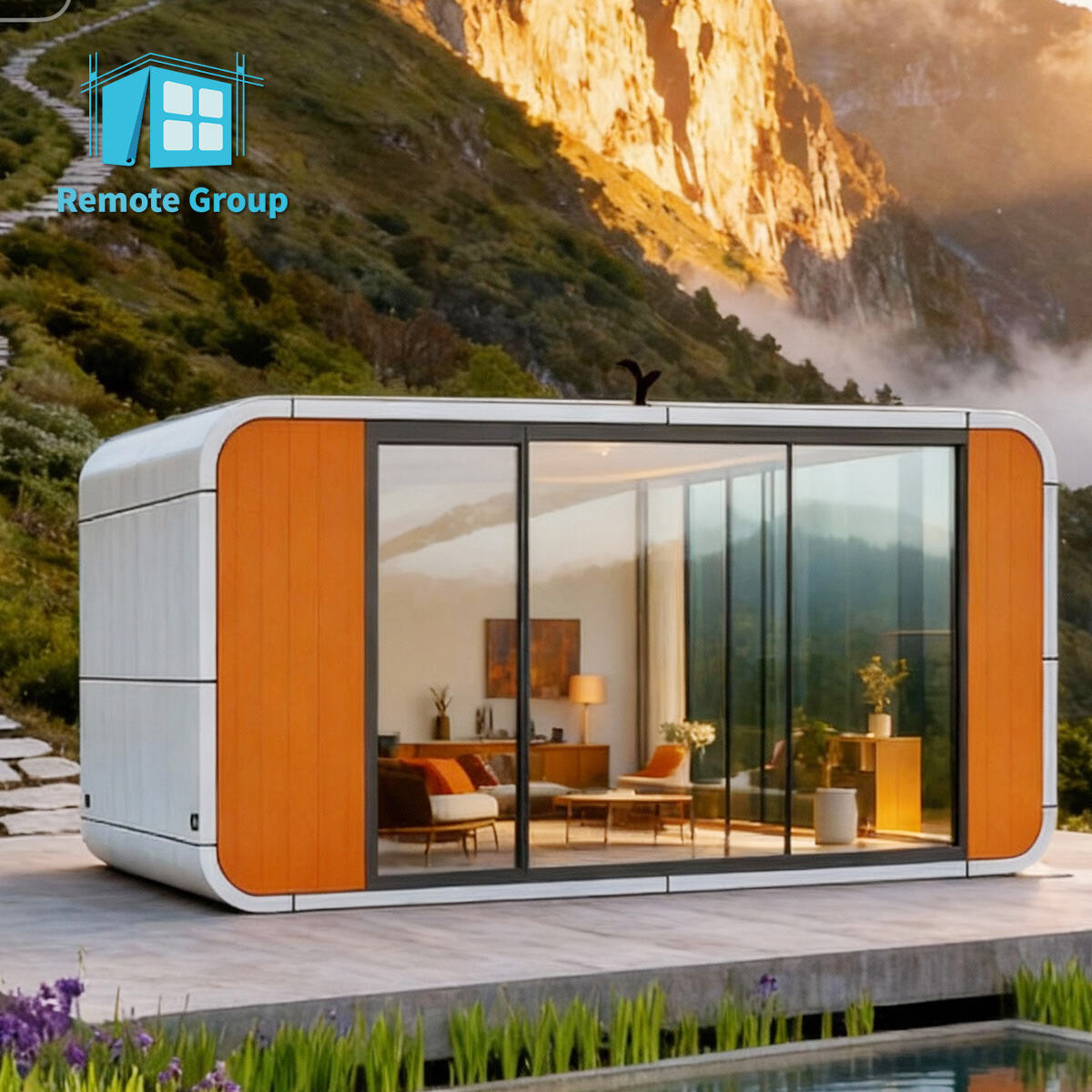
What Is a Prefab House? Types, Components, and Core Principles
Defining prefab house: Modular, panelized, SIP, and manufactured homes explained
A prefab house (prefabricated house) is a dwelling constructed primarily off-site in a controlled factory environment, then transported and assembled on location—offering greater precision, speed, and consistency than traditional on-site building. Key types include:
- Modular homes: Comprising multiple room-sized, three-dimensional sections built to local building codes and assembled on a permanent foundation.
- Panelized homes: Featuring pre-engineered wall, floor, and roof panels shipped flat for rapid on-site assembly.
- SIP (Structural Insulated Panel) homes: Using high-performance foam-core panels that integrate structure and insulation, significantly improving thermal performance and air tightness.
- Manufactured homes: Built entirely on a permanent steel chassis to federal HUD Code standards, typically sited on non-permanent foundations and subject to distinct zoning rules.
Key prefabricated components—modules, panels, pods, and cassettes—and how they integrate
Factory-built components streamline construction through precision engineering and repeatable processes. Modules are volumetric, room-scale units; panels form structural envelopes; pods deliver fully finished bathrooms or kitchens; and cassettes combine structural framing with integrated flooring systems. Integration relies on:
- Interlocking joints and standardized connection points
- Digital assembly guidance via BIM-based sequencing
- Weather-tight interface detailing verified during factory QA
This component-based logic reduces on-site labor without sacrificing architectural expression—enabling both efficiency and design integrity.
How a Prefab House Is Built: From Factory Fabrication to On-Site Completion
Factory production, logistics, and precision assembly workflow
The prefab construction process starts inside temperature controlled factory settings where workers build walls, flooring systems, roof sections, and complete building modules using computer numerical control machines alongside automated production lines. Factories avoid those frustrating weather delays that plague traditional construction sites and studies show they can cut down on wasted materials by around 30 percent according to McGraw Hill Construction data from 2022. Before anything leaves the warehouse, each part goes through thorough inspection checks to ensure everything meets standards. Building Information Modeling software then maps out exactly when each piece needs to arrive at the job site, so there's minimal waiting around for components to show up. By applying lean manufacturing techniques, even customized buildings can maintain tight dimensional accuracy within plus or minus 3 millimeters, which means far fewer last minute fixes once the pieces are assembled on location.
Critical on-site phases: foundation prep, module placement, structural integration, and finishing
While factory work progresses, site crews prepare foundations—typically insulated concrete slabs or helical piers—engineered to exact elevations matching module interfaces. Upon arrival, cranes position modules or panels in hours, not weeks, following pre-engineered connection protocols:
| Phase | Key Activities | Efficiency Impact |
|---|---|---|
| Structural Locking | Bolting steel connectors, welding moment frames, sealing inter-module joints | Achieves weather-tightness in ≤48 hours |
| Systems Integration | Routing MEP (Mechanical, Electrical, Plumbing) through pre-chased conduits | Cuts utility hookups by 40% vs. stick-built |
| Interior Finishing | Installing pre-assembled fixtures, completing drywall seams, applying finishes | Reduces on-site labor by 50% |
Final inspections verify envelope continuity, system functionality, and code compliance—accelerating occupancy permits. The result is a turnkey home delivered 30–50% faster than conventional construction, with consistent quality across every unit.
Designing Your Prefab House: Balancing Customization, Regulations, and Real-World Feasibility
Tailoring layout, aesthetics, and features within prefab house design constraints
Modern prefabricated homes actually offer quite a bit of customization these days. People can get open floor plans, those nice high ceilings, plus fancy finishes and even wood elements made from large timber sections. All this happens without breaking the rules of what factories can produce and how houses get moved around. When building their dream home, owners have options too. They might pick windows that save energy, roofs ready for solar panels, or CLT framing materials that come from responsible sources. The best part? These choices don't mess with how easy it is to construct the house or make costs unpredictable. Getting good results really comes down to matching what someone wants with three basic limitations that just can't be ignored:
- Local building codes, including seismic, wind, fire, and energy requirements
- Transport limitations, which cap module width to 16 feet and height to 13.5 feet for standard highway transit
- Site-specific conditions, such as slope, soil bearing capacity, flood zone designation, and solar orientation
Take coastal construction for example it needs windows that can withstand impacts plus foundations raised above ground level. Mountain properties are different too they usually call for roofs with steeper angles and buildings rated to handle heavy snow loads. When homeowners get together with architects and manufacturers from day one, most projects end up around 80 to 90 percent successful in getting what they want without needing expensive fixes later on site. This shows prefabrication isn't only faster and cheaper than traditional methods it actually gives people real control over how their homes look and function.
FAQ Section
What is the main advantage of prefab homes?
Prefab homes offer quicker construction time, reduced material waste, and consistent quality, often at a lower cost compared to traditional homes built on-site.
What types of prefab homes are there?
There are several types including modular homes, panelized homes, SIP homes, and manufactured homes, each with its own construction methodology and regulatory considerations.
Can I customize a prefab house?
Yes, many prefab homes allow for customization of design features such as layout, finishes, and sustainability options, while still adhering to constraints like local building codes and transport limitations.