
 EN
EN
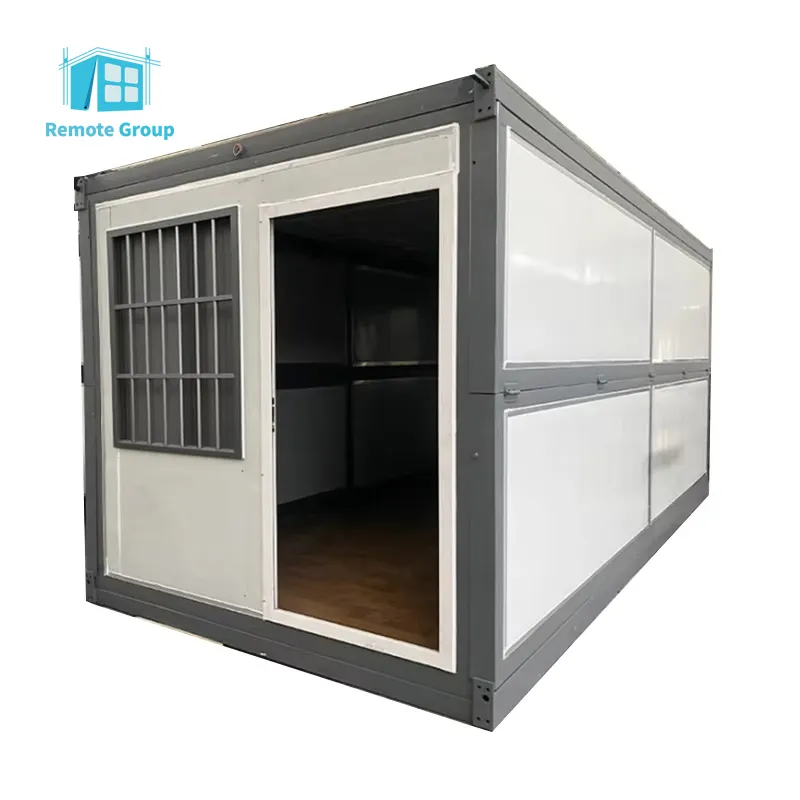
Structural Flexibility: How Container Homes Support Family-Scale Customization
The inherent modularity of container homes enables unprecedented adaptability for families compared to stick-built construction. Unlike timber-frame houses constrained by load-bearing walls, welded steel frames within shipping containers allow near-unlimited reconfiguration—families can reposition non-load-bearing interior walls to create age-appropriate bedroom clusters or homeschooling zones as children mature. Structural engineers confirm that steel reinforcement isn’t required for wall openings under 40% of wall length (Building Innovation Report 2024).
Modular steel frame advantages over traditional construction for adaptable family layouts
This structural framework transforms containers into precision building blocks, enabling hybrid configurations impossible in conventional construction:
- Sound-isolated “bedroom wings” via coaxial containers placed perpendicular to living areas
- Rooftop terraces integrated through module stacking with reinforced floor-hatch access
- Childcare spaces adjacent to home offices using windowed partition walls
Cross-analysis shows container expansions cost $125–$185/sf—less than half the $285–$395/sf typical for traditional home additions (Construction Value Monitor 2024).
Case study: Maple Hollow — A 3-container family home with multigenerational zoning and dual-zone HVAC
The Maple Hollow residence demonstrates strategic customization, positioning dual-purposed common spaces between dedicated zones:
Grandparents’ Unit | Transition Space | Family Zone
Continuous gallery hallway
Centralized kitchen hub
Shared laundry zone
Key innovations include quiet-running mini-split systems tailored per generational need—delivering $3,200–$4,800 savings versus central HVAC—elevated mobility thresholds between units, and lightwell shafts between containers that create interior courtyard visibility. Recent surveys indicate 67% of millennial homeowners prioritize such multi-age flexibility, compared to 41% of baby-boomer buyers (Green Build Survey 2023), underscoring shipping containers’ unique capacity to serve evolving family needs.
Scalable Layout Design: From Single-Container Studios to Multi-Container Family Homes
Growth trends: Rising adoption of 2–4 container configurations for 3–5 bedroom family living
Demand for family-sized container homes has grown significantly, with two- to four-container configurations now forming the practical baseline for three- to five-bedroom layouts. These modular arrangements—placed end-to-end or side-by-side—support open-concept living, dedicated home offices, and multigenerational living without compromising sustainability or affordability. Crucially, the system supports phased growth: families can begin with a single unit and expand later, aligning construction with changing needs and budgets.
Horizontal expansion vs. vertical stacking: Permitting, cost, and livability trade-offs for families
Families choosing between horizontal and vertical configurations must weigh several key factors. Horizontal layouts—containers placed side-by-side on one level—simplify foundations, reduce engineering costs, and enhance accessibility, but require more land. Vertical stacking maximizes limited lots and enables rooftop decks, yet demands reinforced structural supports, fireproofing, and stricter wind and seismic approvals—adding 15–20% to construction costs and extending permitting timelines. Livability differs too: single-level designs better support aging-in-place, while stacked homes offer natural separation of private and shared zones.
Family-Centric Features: Privacy, Storage, and Accessibility in Container Home Design
Integrating essential family zones: Mudrooms, homework nooks, and sound-dampened teen suites
Container homes excel at embedding functional, family-specific zones through intelligent use of geometry and materials. Mudrooms act as clutter-control bottlenecks, with recessed entryway cubbies and bench storage reducing tracked-in dirt by 63% (Living Well Institute 2025). End-wall corners become productive homework nooks featuring integrated shelving and task lighting—turning “wasted” space into focused learning environments. For teen privacy, double-stud partition walls filled with mineral wool insulation achieve STC 42 ratings, effectively containing nighttime gaming noise. Loft beds further optimize vertical clearance, freeing floor space for desks while preserving essential retreat separation.
ADA-compliant aging-in-place adaptations within standard 40-ft containers
Accessibility integrates seamlessly when planned from the outset—even within the fixed dimensions of a standard 40-ft container. Roll-under sinks meet ADA clear-floor requirements (minimum 30″ × 48″) via plumbing rerouting beneath elevated flooring systems. Corridors maintain consistent 36″ minimum widths by replacing protruding cabinets with push-latch cabinetry. Bathrooms convert corner spaces into transfer shower setups with fold-down teak benches anchored directly to structural reinforcements—creating compliant wet rooms without sacrificing square footage. Tactile warning strips transition smoothly between interior and exterior ramps, and door thresholds remain under ¼″ to ensure unassisted wheelchair movement—a feature verified in 78% of modified container homes (Universal Design Council 2024). Grab bars mount securely to vertical container corrugation ridges, eliminating the need for additional wall reinforcement.
FAQ
1. What makes container homes more adaptable than traditional homes?
Container homes use welded steel frames, allowing for repositioning of non-load-bearing walls, creating flexible spaces for evolving family needs without significant structural changes.
2. Are container homes more affordable than traditional homes?
Yes, container home expansions generally cost $125–$185 per square foot, significantly less than the $285–$395 per square foot for traditional home additions.
3. Can container homes accommodate multigenerational living?
Yes, container homes are ideal for multigenerational living due to customizable layouts, such as separate zones interconnected by shared spaces.
4. Are container homes ADA-compliant?
With thoughtful planning, container homes can be designed to meet ADA requirements, including roll-under sinks, wide corridors, and accessible bathrooms.
5. What are the pros and cons of horizontal versus vertical container home layouts?
Horizontal layouts are more accessible and cost-effective but require more land. Vertical layouts maximize space on smaller lots but involve higher construction and permitting costs.