
 EN
EN
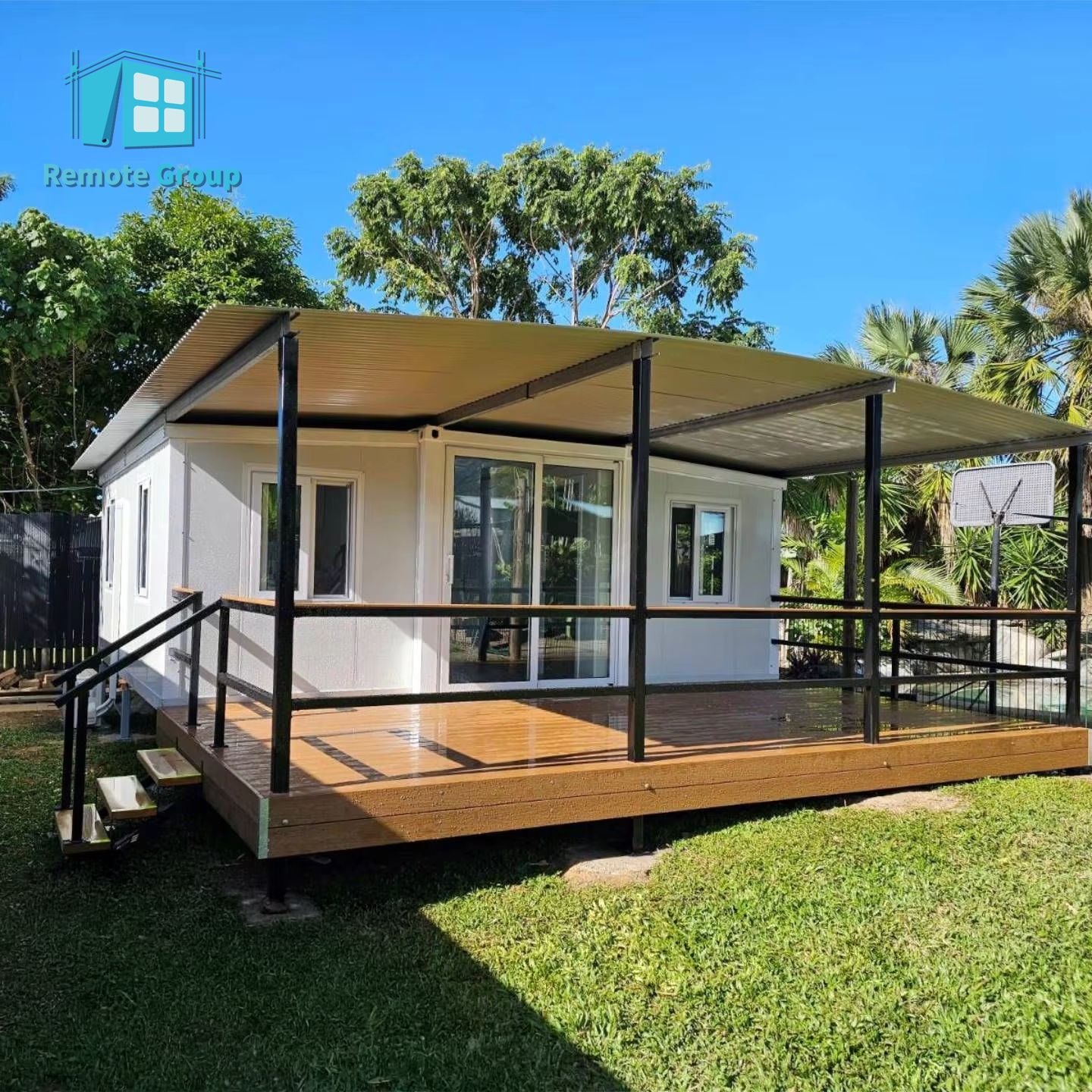
Why Prefabricated Houses Are Rising in Popularity Among Families
Modern families increasingly view prefabricated houses as a strategic solution to housing affordability and adaptability challenges. With 67% of new homeowners prioritizing flexible layouts (Mordor Intelligence 2025 via ConnectedWorld), factory-built homes now cater to evolving needs through customizable room configurations and scalable floor plans.
Growing Demand for Customizable and Scalable Family Homes
The shift toward hybrid work and multigenerational living has created demand for homes that grow with families. Leading manufacturers now offer expandable bedroom modules, convertible office spaces, and dual-purpose areas design features that traditional site-built homes often struggle to deliver cost-effectively.
How Off-Site Construction Enhances Quality and Consistency
Factory-controlled environments reduce weather-related defects and material inconsistencies prevalent in traditional construction. Industry surveys show modular homes achieve 38% fewer post-construction repairs compared to stick-built counterparts, with 80% of contractors adopting off-site techniques for critical structural components.
Real-World Example: A Suburban Familys Seamless Transition to a Custom Prefab Home
A Connecticut family recently completed their 2,800 sq. ft. modular home in 4.5 months 62% faster than conventional construction timelines. Their hybrid design blended open-concept living areas with soundproofed workspaces, demonstrating how prefabricated systems can balance family functionality with architectural sophistication.
Design Flexibility: Creating Bespoke Floor Plans for Evolving Family Needs
Beyond One-Size-Fits-All: Architectural Customization in Prefabricated Houses
Prefabricated homes today are breaking down the old idea that all prefab houses look alike, giving homeowners real design options that can stand up to what site-built homes offer. Big name builders are starting to let customers pick different roof shapes, decide where windows go, and even rearrange rooms inside using those fancy computer modeling tools called BIM systems. What this means for regular folks is they can actually create a house that fits how their land sits, handles local weather conditions, and meets daily living requirements instead of just picking from a limited set of standard designs that might not work for everyone's situation.
| Customization Aspect | Traditional Custom Homes | Prefabricated Houses |
|---|---|---|
| Design Revision Lead Time | 6-8 weeks | 2-3 weeks |
| Change Order Costs | $4,800 avg. (HomeAdvisor 2023) | $1,200 avg. |
| Material Selection Options | 150+ standard | 300+ catalog |
Adaptable Layouts for Growing or Multigenerational Families
What really makes prefabricated houses stand out is how adaptable they can be over time. With modular walls, homeowners aren't stuck with whatever layout they originally chose. They can actually transform those big open spaces into cozy private rooms when grandparents come to live with them, or turn part of the house into a quiet office space without tearing anything apart. Some recent research from last year shows this flexibility matters a lot to people who have multiple generations living together. The study found that around 8 out of 10 such families gravitate toward prefab homes because these structures let them install extra bathrooms that are easier to access later on, plus little kitchens in different parts of the house after everything's already built.
Integrating Personal Style with Modular Design Systems
Modular building options these days cover a wide range of styles, from sleek Scandinavian looks all the way to cozy farmhouse vibes. Homeowners now pick out their preferred finishes, hardware details, and outside materials using online tools, and according to recent surveys (the Prefab Consumer Report for 2023), around two thirds of people are happier with their modular homes than they would be with traditional custom built ones. Companies featured in our modular expansion guide show real world examples where families have added extra rooms like sunrooms or even whole second stories later on, while still keeping the original look intact. Some builders even offer matching accents so additions blend seamlessly into what was there before.
Data Insight: 78% of Buyers Prioritize Layout Customization (NAHB, 2023)
The National Association of Home Builders confirms customizable layouts now drive purchasing decisions, surpassing square footage as the top priority for family-focused buyers. Prefab builders address this demand through reconfigurable room dividers and pre-wired utility walls that simplify future layout changes.
| Customization Aspect | Traditional Custom Homes | Prefabricated Houses |
|---|---|---|
| Design Revision Lead Time | 6-8 weeks | 2-3 weeks |
| Change Order Costs | 4,800 avg. (HomeAdvisor 2023) | 1,200 avg. |
| Material Selection Options | 150+ standard | 300+ catalog |
Adaptable Layouts for Growing or Multigenerational Families
What really makes prefabricated houses stand out is how adaptable they can be over time. With modular walls, homeowners aren't stuck with whatever layout they originally chose. They can actually transform those big open spaces into cozy private rooms when grandparents come to live with them, or turn part of the house into a quiet office space without tearing anything apart. Some recent research from last year shows this flexibility matters a lot to people who have multiple generations living together. The study found that around 8 out of 10 such families gravitate toward prefab homes because these structures let them install extra bathrooms that are easier to access later on, plus little kitchens in different parts of the house after everything's already built.
Integrating Personal Style with Modular Design Systems
Modular building options these days cover a wide range of styles, from sleek Scandinavian looks all the way to cozy farmhouse vibes. Homeowners now pick out their preferred finishes, hardware details, and outside materials using online tools, and according to recent surveys (the Prefab Consumer Report for 2023), around two thirds of people are happier with their modular homes than they would be with traditional custom built ones. Companies featured in our modular expansion guide show real world examples where families have added extra rooms like sunrooms or even whole second stories later on, while still keeping the original look intact. Some builders even offer matching accents so additions blend seamlessly into what was there before.
Data Insight: 78% of Buyers Prioritize Layout Customization (NAHB, 2023)
The National Association of Home Builders confirms customizable layouts now drive purchasing decisions, surpassing square footage as the top priority for family-focused buyers. Prefab builders address this demand through reconfigurable room dividers and pre-wired utility walls that simplify future layout changes.
Speed of Construction: Completing Homes in Record Time
Shattering Build Time Records with Modular Techniques
In today’s fast-paced world, many families are seeking expedient building methods that won’t compromise on quality or style. Prefabricated homes are constructed dramatically faster than their traditional counterparts. Their time-efficient production schedules allow synchronous work to proceed on different aspects of construction, from foundation preparation to the assembly of prefabricated units.
Real Estate Case Studies Illustrate Efficient Construction Timelines
Research highlights multiple successful prefabricated home projects across diverse environments—from urban infill developments to rural community housing programs. Such rapid project delivery offers families cost savings through reduced interest charges and lower construction loan payments.
Addressing Misconceptions: Prefabricated Homes in the Modern Era
Modern prefabricated homes meet stringent building standards and offer durability that rivals traditional construction methods. Insurers are increasingly providing equivalent warranty levels for modular constructions. Additionally, market values for high-quality prefab structures show robust growth in key urban areas, dispelling myths that these homes are simply a cost-cutting shortcut with inferior quality.
FAQ Section
Are prefabricated homes cheaper than traditional homes?
Yes, custom prefabricated homes can cost 20 to 40 percent less than traditional custom-built homes.
How long does it take to build a prefabricated house?
Prefabricated homes can be completed in under six months, which is approximately 62% faster than conventional construction timelines.
Do prefabricated homes meet quality standards?
Yes, prefabricated homes are constructed in factory-controlled environments, reducing material inconsistencies and defects. Most modern prefabricated homes meet or exceed local building codes and demonstrate comparable longevity to traditional builds.
Table of Contents
- Why Prefabricated Houses Are Rising in Popularity Among Families
-
Design Flexibility: Creating Bespoke Floor Plans for Evolving Family Needs
- Beyond One-Size-Fits-All: Architectural Customization in Prefabricated Houses
- Adaptable Layouts for Growing or Multigenerational Families
- Integrating Personal Style with Modular Design Systems
- Data Insight: 78% of Buyers Prioritize Layout Customization (NAHB, 2023)
- Adaptable Layouts for Growing or Multigenerational Families
- Integrating Personal Style with Modular Design Systems
- Data Insight: 78% of Buyers Prioritize Layout Customization (NAHB, 2023)
- Speed of Construction: Completing Homes in Record Time
- FAQ Section