
 EN
EN
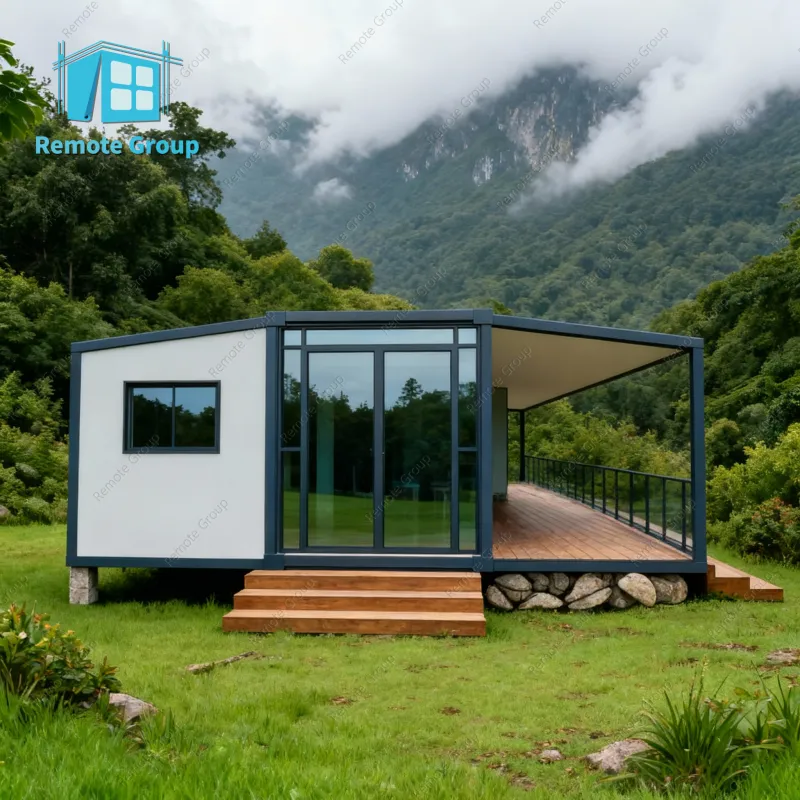
Key Layout Types for Casas Prefabricadas: Standard, Semi-Custom, and Fully Custom
Layout options range from ready-to-use floor plans to fully bespoke designs. The choice directly affects project timeline, cost, and how well the home fits a buyer’s lifestyle.
Functional trade-offs: speed-to-build vs. personalization in casas prefabricadas
Standard layouts compress construction time because every component is pre-engineered and manufactured without deviations—enabling move-in within weeks instead of months. Semi-custom plans offer a middle ground: a pre-approved footprint with a short menu of changes, such as relocating a wall or upgrading finishes, adding only a few days to the schedule. Fully custom designs require extensive engineering and typically extend delivery by eight to twelve weeks. In exchange, buyers gain full control over dimensions, room allocation, and aesthetic details. The core trade-off remains clear—choose a standard model for speed or invest extra time to tailor every square meter.
How modular, panelized, and hybrid systems constrain or enable layout flexibility
Modular construction builds homes in factory-finished three-dimensional boxes. Fixed module dimensions limit interior shape variation, but stacking or offsetting modules enables split-level or two-story configurations. Panelized systems ship walls, floors, and roof trusses as flat components for on-site assembly—offering maximum geometric freedom, including bay windows, angled façades, and irregular room shapes. Hybrid systems combine modular cores (e.g., kitchen and bathrooms) with panel-built wings, delivering the efficiency of standardized wet zones alongside design flexibility elsewhere. Each method presents distinct trade-offs: modular prioritizes speed and predictability; panelized expands creative potential at the cost of increased on-site coordination; hybrid balances both—making it ideal for projects requiring both performance and personalization.
Aligning Casas Prefabricadas Layouts with Lifestyle and Life-Stage Needs
Matching room configuration and flow to household composition and daily routines
The best casas prefabricadas layouts reflect how families actually live—not just how they’re expected to. Room configuration must respond to household composition: young children benefit from open, supervised play areas near living spaces; teenagers need privacy and separation; remote workers require dedicated, acoustically insulated offices. Modern prefab designs increasingly support reconfigurable layouts—such as sliding partitions or convertible rooms—so a guest suite can double as a home office or studio. Daily routines further shape flow: open-plan kitchens adjacent to living areas suit collaborative cooking and socializing, while separated bedroom wings enhance quiet and rest. Crucially, many prefab systems support phase-built additions—allowing bedrooms, offices, or accessory units to be added in weeks rather than months. This adaptability ensures the home evolves alongside changing needs, whether due to growing families, aging parents, or permanent remote work.
Designing for longevity: aging-in-place features and multigenerational zoning in casas prefabricadas
Forward-thinking casas prefabricadas layouts integrate aging-in-place and multigenerational living from day one. A 2023 NAHB study found that 68% of homeowners anticipate modifying their homes within five years due to shifting life-stage demands—including caregiving, remote work, or expanding households. Prefab builders address this through intentional zoning: wide doorways, zero-step entrances, reinforced bathroom walls for future grab bars, and accessible shower thresholds can all be embedded into the base design without aesthetic compromise. Separate suites with private entries—whether attached or detached—support independent living for aging relatives or adult children while preserving household harmony. Because prefab systems allow for efficient, factory-integrated structural upgrades, phase-built multigenerational additions cost up to 20% less than traditional renovations. Planning for longevity reduces future disruption and ensures the home remains functional, safe, and meaningful across decades.
Site-Specific Layout Selection: Lot Size, Shape, and Topography
Optimizing narrow, irregular, or sloped lots with responsive casas prefabricadas floor plans
Narrow lots demand vertical and linear efficiency—split-level designs or elongated modules maximize usable width without compromising ceiling height or daylight. Irregular parcels—like L-shaped or wedge lots—benefit from strategic module placement: corners become reading nooks, angled connections form sunrooms, and setbacks align with natural contours. Sloped sites often require stepped foundations or pier-and-beam systems—but prefab excels here. Modules can be manufactured to match exact grade changes, minimizing excavation and preserving drainage patterns. A walk-out basement module on a steep hillside, for example, creates seamless indoor-outdoor transitions between levels while avoiding costly retaining walls. Unlike stick-built alternatives, prefabricated systems adapt precisely to site constraints—turning topographic challenges into architectural opportunities.
Efficient Traffic Flow and Functional Zoning in Casas Prefabricadas
Reducing circulation waste while maintaining privacy and acoustic separation
In high-performance casas prefabricadas, circulation space must earn its square footage. Long hallways and dead-end corridors waste area and disrupt flow. Instead, prioritize direct, intuitive pathways—linking entry, kitchen, and living zones in a logical sequence. Privacy is maintained not through isolation, but through thoughtful layering: partial-height walls, sliding pocket doors, built-in cabinetry, or staggered room placements create visual and acoustic buffers without closing off space. Acoustic separation is especially critical in multi-unit or multigenerational layouts. Locate bedrooms away from mechanical rooms and high-traffic zones, and specify sound-dampening insulation (e.g., mineral wool or resilient channel assemblies) in shared walls and ceilings. These strategies preserve openness while ensuring quiet, comfort, and functional autonomy.
HVAC, lighting, and open-plan trade-offs unique to casas prefabricadas layouts
Open floor plans in casas prefabricadas improve natural light penetration and spatial perception—but introduce unique mechanical and thermal challenges. Without full-height walls to contain conditioned air, HVAC systems must be carefully zoned: mini-split heat pumps or ducted systems with motorized dampers help maintain consistent temperatures across zones. Large windows boost daylight but risk glare and solar heat gain—especially in southern exposures—so integrated shading (e.g., fixed overhangs or low-e glazing) is essential. Panelized and modular systems also impose constraints on mechanical chases: duct runs, plumbing stacks, and electrical conduits must be coordinated early in layout design, as field modifications are limited once panels or modules leave the factory. Early integration of building systems into the floor plan—not as an afterthought—is what separates energy-efficient, comfortable prefab homes from those that merely look modern.
FAQ
What are the main types of casas prefabricadas layouts?
Casas prefabricadas offer three main layout types: standard, semi-custom, and fully custom. Standard layouts expedite construction, semi-custom plans allow limited changes, and fully custom designs provide complete personalization.
How do modular, panelized, and hybrid systems affect layout flexibility?
Modular construction limits shape variety but prioritizes speed; panelized systems allow creative freedom but require on-site coordination; hybrid systems combine efficiency and personalization.
Can casas prefabricadas accommodate aging-in-place and multigenerational living?
Yes, forward-thinking casas prefabricadas integrate features like wide doorways, accessible bathrooms, and multigenerational suites, ensuring the home evolves with changing needs.
How do prefab homes adapt to challenging lots?
Prefab systems excel on narrow, sloped, or irregular lots by leveraging modular designs that fit site constraints efficiently, including stepped foundations and strategic module placement.
What challenges do HVAC and lighting present in open-plan prefab layouts?
Open floor plans require careful HVAC zoning and integrated shading to balance light and temperature. Early coordination of mechanical systems is crucial due to prefab design limits.
Table of Contents
- Key Layout Types for Casas Prefabricadas: Standard, Semi-Custom, and Fully Custom
- Aligning Casas Prefabricadas Layouts with Lifestyle and Life-Stage Needs
- Site-Specific Layout Selection: Lot Size, Shape, and Topography
- Efficient Traffic Flow and Functional Zoning in Casas Prefabricadas
-
FAQ
- What are the main types of casas prefabricadas layouts?
- How do modular, panelized, and hybrid systems affect layout flexibility?
- Can casas prefabricadas accommodate aging-in-place and multigenerational living?
- How do prefab homes adapt to challenging lots?
- What challenges do HVAC and lighting present in open-plan prefab layouts?