
 EN
EN
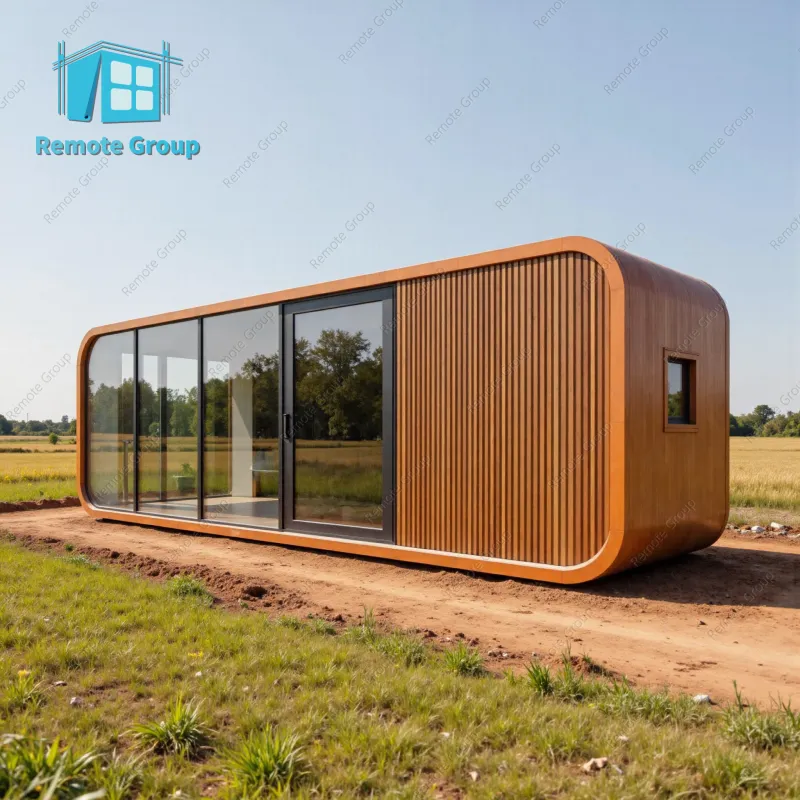
Prefab House Timeline: Realistic Duration from Contract to Move-In
A prefab house offers a significantly faster path to homeownership compared to traditional construction. From initial contract signing to move-in, the entire process typically takes 3 to 6 months, with most projects landing in the 2- to 4-month window for factory production, delivery, and on-site finishing. This accelerated timeline is one of the most compelling advantages of prefab construction. While a traditional build often exceeds 12 months due to sequential tasks and weather-dependent site work, prefab streamlines execution through parallel processing: structural components are manufactured in a climate-controlled factory while site preparation—including foundation work—proceeds simultaneously on your land. In many cases, the on-site delivery and assembly phase is completed in just 3 to 5 days, followed by 2–4 weeks for mechanical connections, interior finishes, and final inspections. This predictability allows for confident, stress-free move-in planning.
Step-by-Step Prefab House Construction Process
Pre-Planning, Design, and Permitting
The first phase begins well before factory work starts. Homeowners secure land, conduct geotechnical and utility assessments, and prepare the site—grading for drainage, clearing obstructions, and verifying access. Architects and engineers then develop detailed, code-compliant blueprints tailored to both local regulations and the homeowner’s functional and aesthetic goals. Permit applications follow, with review times varying widely by jurisdiction—from two weeks in streamlined municipalities to 8+ weeks where zoning or environmental reviews apply. A rigorous pre-planning phase mitigates downstream risk: resolving design ambiguities and permitting requirements upfront prevents costly revisions once manufacturing begins.
Factory Manufacturing and Quality Assurance
Once permits are secured and contracts signed, production shifts to a controlled factory environment. Skilled tradespeople fabricate wall panels, floor cassettes, and roof trusses using CNC machinery—ensuring dimensional precision, consistent insulation installation, and minimal material waste. Each module undergoes multiple quality checkpoints: framing integrity, air-sealing verification, electrical rough-in compliance, and window/door integration. Because factory conditions eliminate exposure to rain, extreme temperatures, or wind-driven dust, production proceeds uninterrupted—contributing directly to schedule reliability and long-term building performance. This level of oversight aligns with standards set by the National Institute of Building Sciences (NIBS) and reflects best practices outlined in the ICC 100 Standard for Residential Prefab Construction.
On-Site Foundation, Delivery, and Assembly
While modules are being built off-site, contractors prepare the property—pouring slab-on-grade foundations, installing helical piers, or constructing basements depending on soil conditions and design intent. Once modules arrive via flatbed truck, a crane lifts each section into position. Crews then bolt modules together, seal inter-module joints with structural gaskets and flashing systems, and integrate plumbing, electrical, and HVAC lines across connections. Final interior trim, cabinetry, and fixture installation follows, culminating in municipal inspections. For a standard single-story, three-module home, this on-site phase typically requires 5–12 days; larger or multi-level designs may extend to 3–4 weeks—but still represent a fraction of the time needed for conventional framing and enclosure.
Prefab House vs. Traditional Build: Time Savings Explained
The core time advantage of prefab lies in concurrency—not compression. Traditional builds follow a rigid linear sequence: foundation must cure before framing; framing must be complete before roofing; roofing must be sealed before interior trades begin. Each step waits on the prior, and all are vulnerable to weather, labor shortages, or coordination failures. Prefab decouples these dependencies: foundation work advances while walls and floors are fabricated indoors—free from rain delays, freeze-thaw cycles, or subcontractor no-shows. According to the U.S. Census Bureau’s 2023 Survey of Construction, the median completion time for site-built single-family homes was 7.2 months, versus 4.1 months for factory-built units—including modular and panelized systems. The factory’s controlled environment also reduces rework, further safeguarding the schedule. For buyers seeking certainty, prefab delivers not just speed—but verifiable, repeatable timelines backed by decades of industry data.
What Delays a Prefab House Build? Key Timing Risks
Even with its inherent efficiencies, a prefab house project can encounter setbacks. Recognizing common risks early supports realistic scheduling and proactive mitigation.
Design Changes, Permitting Hurdles, and Supply Chain Factors
Late-stage design changes—such as altering window layouts, moving load-bearing walls, or upgrading structural systems—often require engineering sign-offs and factory rescheduling, adding 3–6 weeks. Permitting remains the most frequent bottleneck: jurisdictions with limited prefab experience may request additional documentation, third-party reviews, or revised energy modeling—delaying approvals by 4–10 weeks. Supply chain volatility, though less acute than during 2020–2022, still affects lead times for specialized windows, appliances, or HVAC equipment. Site-specific challenges—narrow access roads, unimproved terrain, or seasonal ground saturation—can delay foundation work or module placement. Building in a minimum 2–3 week contingency before the target move-in date is a widely adopted best practice among experienced prefab builders and is recommended by the Modular Building Institute (MBI).
FAQ
How long does it take to build a prefab house?
From contract signing to move-in, the entire process typically takes 3 to 6 months, including factory production, delivery, and finishing on-site.
What factors can delay a prefab house project?
Common delays include late-stage design changes, permitting hurdles, supply chain disruptions, and site-specific issues like narrow access roads or poor ground conditions.
How does prefab construction save time compared to traditional builds?
Prefab saves time through concurrent processes. Factory production occurs alongside site preparation, reducing the overall timeline.
How reliable is the timeline for prefab construction?
The timeline is highly predictable due to controlled factory conditions and streamlined processes that reduce the risks associated with weather or labor shortages.